

Stop the bleed - First Aid for severe trauma (FAST) certifications
Traumatic bleeding is the number one preventable cause of death from injury. The Stop the Bleed certification course — officially First Aid for Severe Trauma (FAST) — teaches you the hands-on skills to recognize a life-threatening bleeding emergency and act immediately. No medical background required. No prior training needed. Just the skills that save lives.
CERTIFICATION
American Red Cross First Aid for Severe Trauma (FAST) - Stop the Bleed


LOCATION
Hollywood Production Center 1149 N. Gower St. Hollywood, CA
FORMAT
In-person · Hands-on skills practice

#1
PREVENTABLE CAUSE OF TRAUMATIC
DEATH IS SEVERE BLEEDING
4m+
PEOPLE TRAINED IN
STOP THE BLEED SINCE 2015
100%
HANDS-ON
PRACTICE INCLUDED
ARC
AMERICAN RED
CROSS CERTIFIED
ABOUT THIS COURSE
The skills that bridge the gap between injury and emergency services
When a traumatic bleeding emergency happens, the time between the injury and the arrival of emergency medical services is the most critical window. Bystanders who are trained in bleeding control have been shown to significantly improve survival outcomes — but only if they know what to do.
The Stop the Bleed certification course — formally known as First Aid for Severe Trauma (FAST) — is the national bleeding control program developed through a collaboration between the American Red Cross and the National Center for Disaster Medicine and Public Health, with support from the Department of Homeland Security. It is backed by the American Heart Association and endorsed by public health organizations nationwide.
The techniques taught in this course come from battlefield medicine — proven in combat and adapted for everyday civilian emergencies. Whether the emergency is a car accident, a workplace injury, an act of violence, or any other traumatic event, Stop the Bleed prepares you to act decisively when it matters most.
American Red Cross First Aid for Severe Trauma (FAST) Certificate
Issued upon successful completion · Nationally recognized · Hands-on skills-based curriculum
Also Included In: Fear to Fire Weekend (Day 1) — if you're registered for the weekend course, Stop the Bleed is already covered.
CURRICULUM
what Stop the bleed covers
Every skill you walk away with could save a life. Here's what's covered:
01
Recognizing a Life-Threatening Bleeding Emergency
Not all bleeding is immediately life-threatening — but some is. Learn how to quickly identify the difference between arterial, venous, and capillary bleeding, recognize the signs of a severe bleeding emergency, and understand when immediate intervention is required.
02
Preparing for a Bleeding Emergency
How to mentally and physically prepare to act in a bleeding emergency — including the importance of having a bleeding control kit accessible at home, in your car, and in your workplace, and how to use what's available around you if a kit isn't within reach.
03
Scene Safety & Situational Awareness
Before you can help someone, you need to keep yourself safe. This module covers how to assess the scene for ongoing threats, how to protect yourself from bloodborne pathogens, and how to help others to safety in a violent or unstable situation.
04
Communicating in an Emergency
How to communicate effectively with others at the scene, alert bystanders, and provide clear and accurate information to the emergency dispatcher — the details that help EMS respond faster and better prepared.
05
Applying Direct Pressure
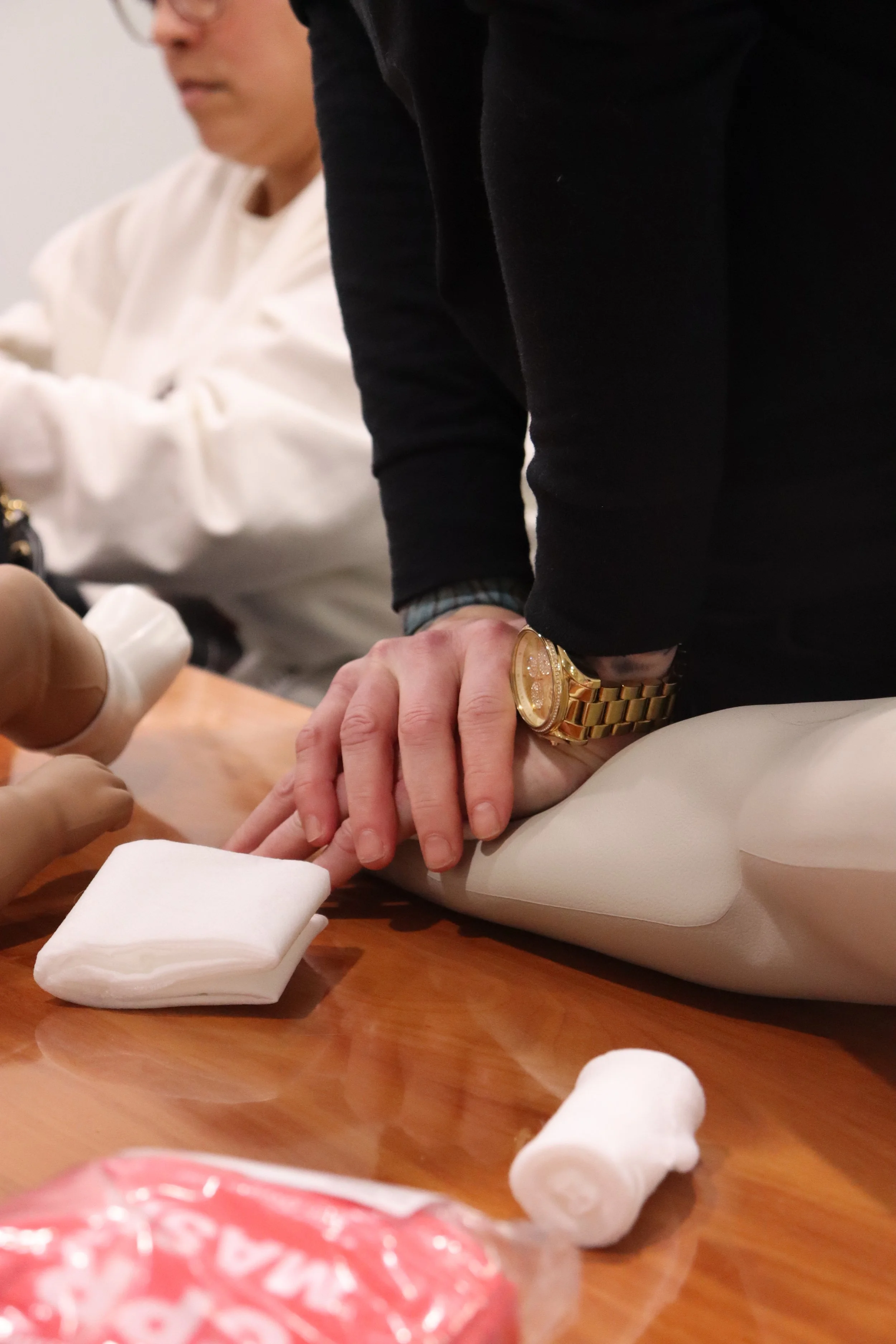
Direct pressure is the first and most accessible tool for controlling severe bleeding. Learn the correct technique for applying firm, sustained pressure using your hands, clothing, or available materials — and how to maintain it effectively until help arrives.
06
Wound Packing with Hemostatic Dressing
When direct pressure alone isn't enough — particularly with deep or irregularly shaped wounds — wound packing is the technique that saves lives. Learn how to properly pack a wound with gauze or hemostatic dressing to control bleeding from the inside out.
07
Tourniquet Application - Windlass & Ratcheting
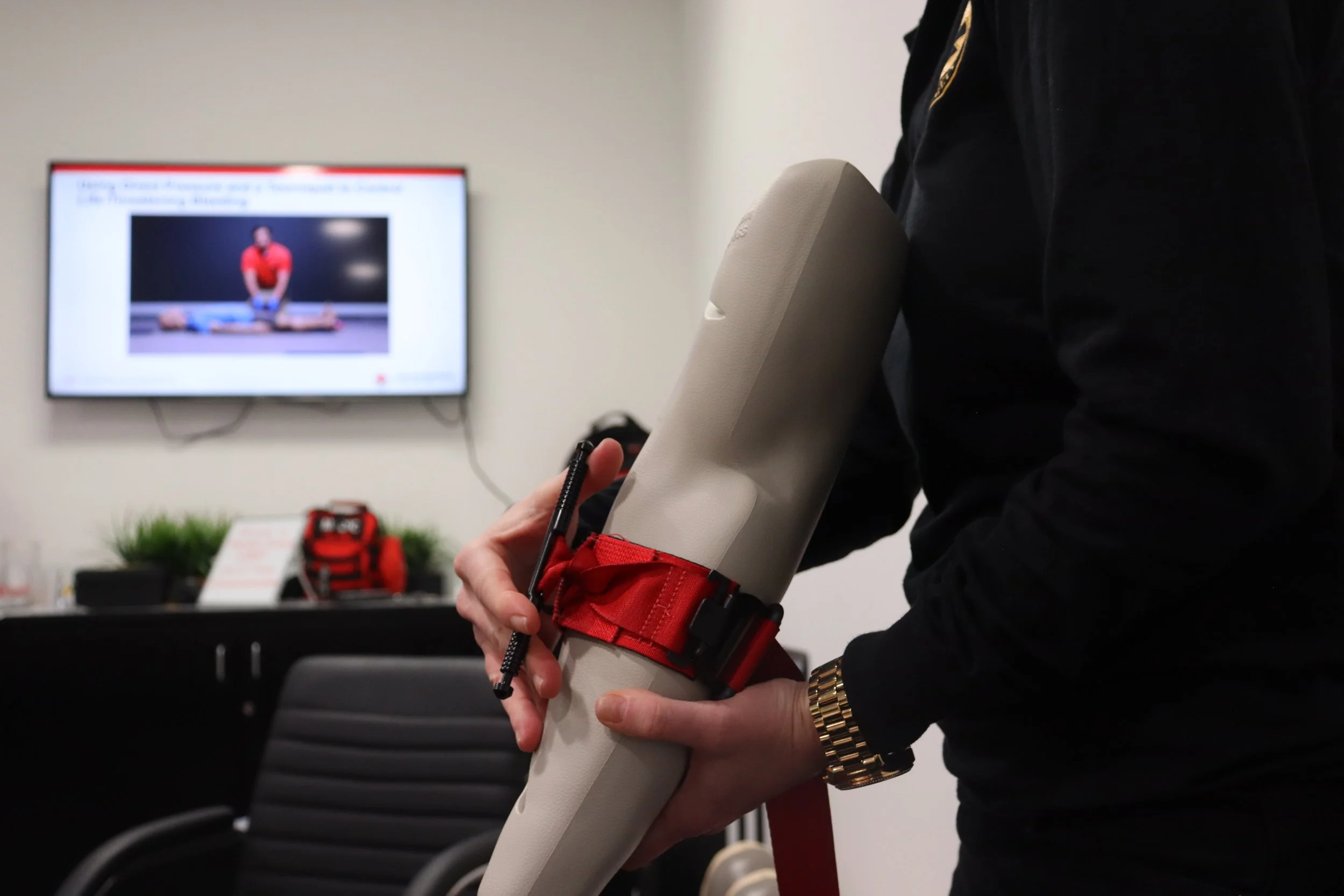
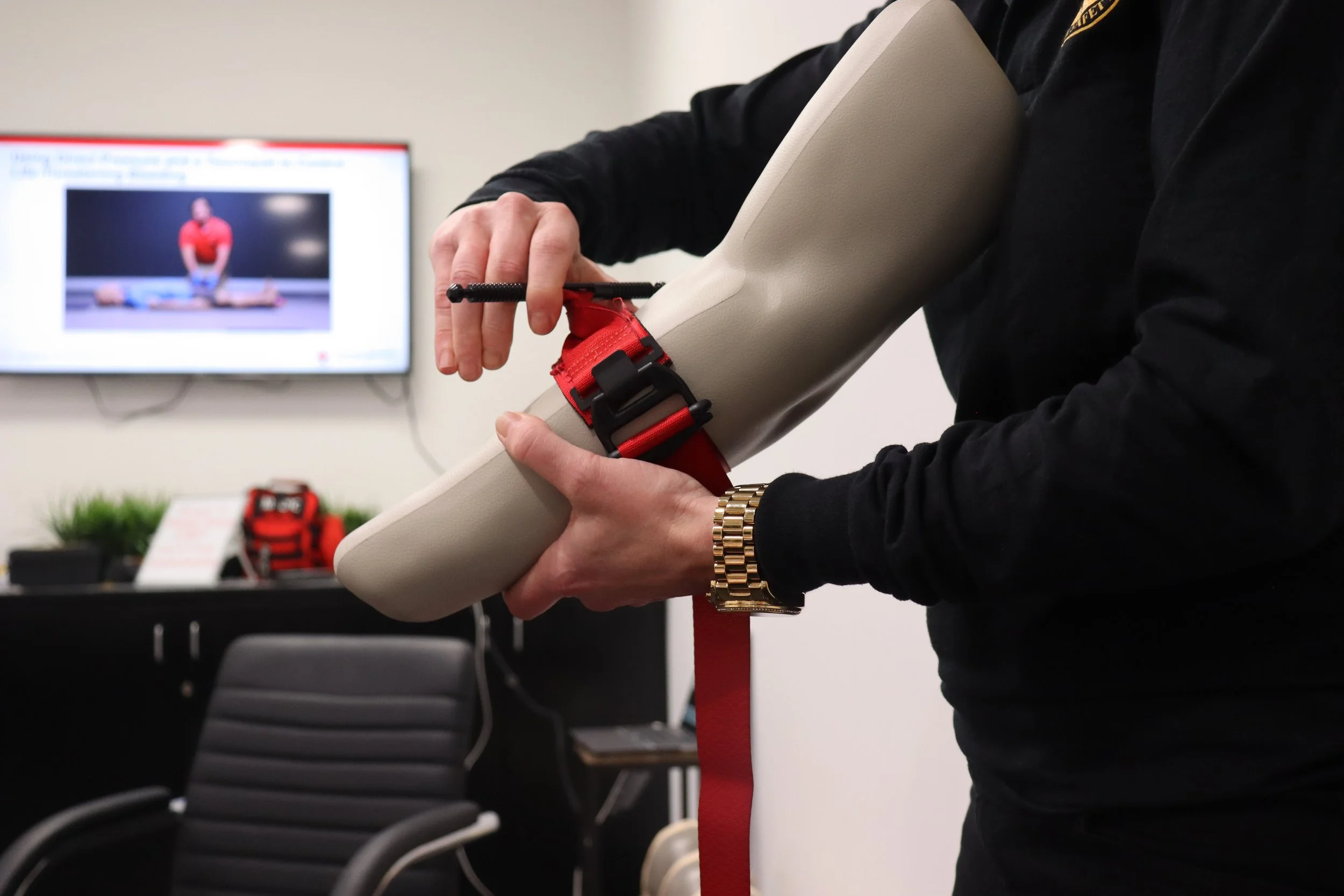
Tourniquets stop arterial bleeding from limbs that cannot be controlled any other way. This module covers proper tourniquet placement, how to tighten a windlass rod tourniquet and a ratcheting tourniquet correctly, how to document the time of application, and what to tell EMS when they arrive.
08
After the Bleeding Stops - Handoff to EMS
What to do after you've controlled the bleeding — monitoring the patient, keeping them calm and warm, what information to pass to arriving emergency responders, and how to support someone in shock while waiting for professional help.
WHO SHOULD TAKE THIS COURSE
Everyone. This course is for everyone.
Stop the Bleed was designed from the ground up to be accessible to any person regardless of age, background, or experience.
If you are physically capable of applying pressure, you are capable of saving a life with this training.
01
Parents & Caregivers
Accidents happen at home. Whether it's a kitchen injury, a fall, or something more serious, every parent and caregiver should know how to control life-threatening bleeding.
02
Teachers & School Staff
Schools have increasingly adopted Stop the Bleed training as part of their emergency preparedness programs. This course prepares educators to act immediately when seconds count.
03
Workplace Teams & Employees
Workplace injuries happen. Every office, warehouse, studio, and job site benefits from having trained individuals who know what to do before EMS arrives.
04
Production & Event Professionals
If you work on film sets, at live events, or in any high-activity production environment, Stop the Bleed training is a critical complement to your on-set safety protocols.
05
Healthcare Students & Professionals
Stop the Bleed covers bleeding control techniques at a level of depth that complements and reinforces clinical training.
06
First Responders & Community Safety Advocates
Enhance your emergency response capabilities and become a resource for the people around you.
07
Anyone Who Wants to be Prepared
You don't need a professional reason to take this course. If you want to know what to do when a bleeding emergency happens, this is where you learn it.
ALSO INCLUDED IN THE FEAR TO FIRE WEEKEND
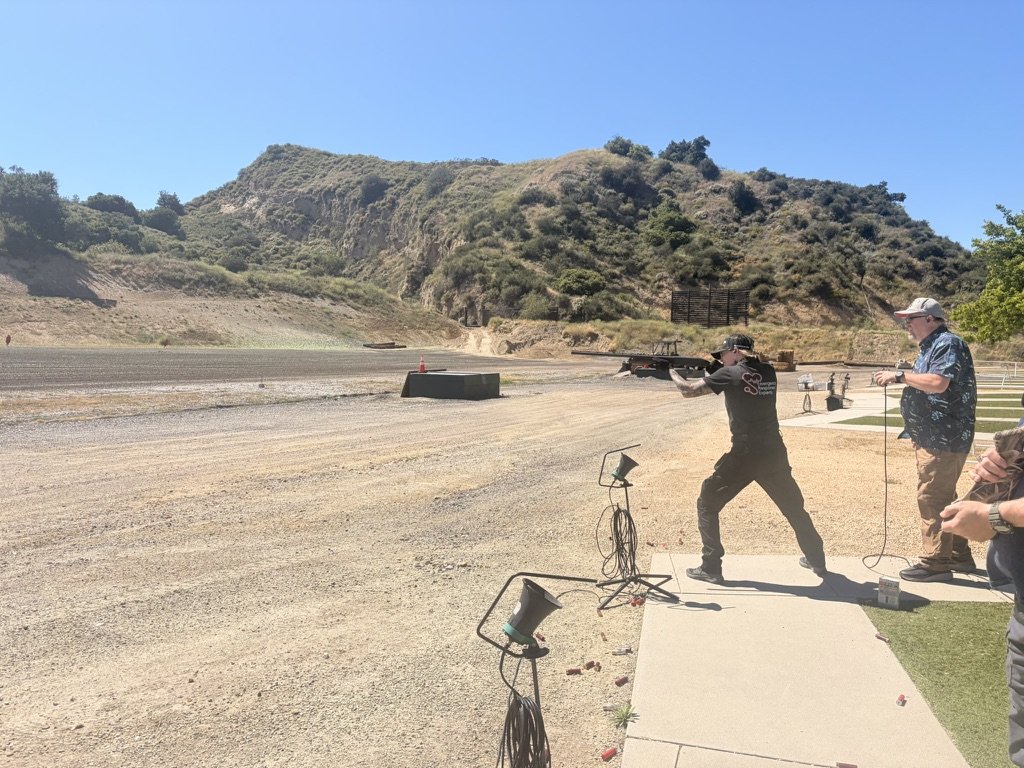
Stop the Bleed Is Day 1 of the Fear to Fire Weekend
If you're interested in comprehensive safety and shooting training, Stop the Bleed certification is included as part of Day 1 of ERE's Fear to Fire Weekend courses — alongside Red Cross CPR/AED/First Aid certification and AVIRT active violence response training.
Fear to Fire Weekend — Pistol: September 12–13, 2026
Fear to Fire Weekend — Rifle: December 12–13, 2026
PRICING
choose your training format
Whether you're an individual or booking for your entire team, we have a package that fits.
for individuals
INDIVIDUAL
Single registration
Open enrollment class
CONTACT FOR PRICING
☑️ Full 5-hour in-person course
☑️ 100% hands-on practice
☑️ First Aid for Severe Trauma training
☑️ Hand Off to EMS training
☑️ 2-year Red Cross digital certificate
FOR TEAMS
STANDARD GROUP
Up to 12 participants
Private session
CONTACT FOR PRICING
☑️ Everything in Individual, plus:
☑️ Private group session at your location
☑️ Custom scheduling - you pick the date
☑️ All equipment provided on-site
☑️ Up to 12 participants included
☑️ Certificates for all participants
FOR LARGE TEAMS
EXTENDED GROUP
Up to 24 participants
Private Session
CONTACT FOR PRICING
☑️ Everything in Standard Group, plus:
☑️ Up to 24 participants included
☑️ Multiple instructors assigned
☑️ Ideal for larger departments & teams
☑️ Priority scheduling available
☑️ Certificates for all participants
-
None at all. Stop the Bleed is specifically designed for everyday people with no medical background. The skills are straightforward, practical, and teachable to anyone. If you can apply pressure, you can save a life with this training.
-
Upon successful completion of the course, you will receive an American Red Cross First Aid for Severe Trauma (FAST) certificate — the official national Stop the Bleed certification, recognized by employers, schools, and organizations nationwide.
-
Standard First Aid courses cover a broad range of emergency situations including CPR, AED use, choking, and basic wound care. Stop the Bleed focuses specifically and in depth on life-threatening bleeding control — tourniquet application, wound packing, and direct pressure technique. The two courses complement each other extremely well and ERE offers both.
-
Yes. ERE's course is based on the American Red Cross First Aid for Severe Trauma (FAST) curriculum — the first national Stop the Bleed course, developed in partnership with the National Center for Disaster Medicine and Public Health and supported by the Department of Homeland Security.
FREQUENTLY ASKED QUESTIONS
Got Questions? WE’ve got answers
-
Yes. The bleeding control techniques in this course are derived from battlefield medicine practices developed and proven in military combat settings. Their effectiveness in trauma situations led to their adaptation for civilian emergency preparedness.
-
Open enrollment classes are held at the Hollywood Production Center, 1149 N. Gower St., Hollywood, CA. Corporate and group sessions can be hosted at your location — ERE brings all equipment to you.
-
Yes. ERE offers private on-site Stop the Bleed training for workplaces, schools, productions, and organizations of any size. Contact us to discuss your group's needs and get a custom quote.
-
Yes. Stop the Bleed certification is included as part of Day 1 of ERE's Fear to Fire Weekend courses — alongside Red Cross CPR/AED/First Aid certification and AVIRT training. If you're registered for the Fear to Fire Weekend, this course is already covered in your package.
Terms & Conditions for FAST / Stop the Bleed Class Enrollment:
1. Personal Information Accuracy
The personal information you provide at the time of registration (including your name, date of birth, and any other identifying details) will be used exactly as submitted on your official CPR certification.
2. Certification Details
The details submitted are final and will appear on your certification document. It is your responsibility to ensure that all information is accurate and complete at the time of enrollment.
3. Changes and Reissue Policy
Any request for changes to the information on your certification (e.g. name correction, spelling errors, or other personal details) after the certification has been issued will require the purchase and completion of a new class. Reissuing a certification with updated or corrected information is not permitted without retaking the course.
By proceeding with your registration, you confirm that you understand and accept these terms.